
Protecting the Rights
of Employees
of Employees







Reviewed by Jonathan I. Nirenberg, a New Jersey employment law attorney and Partner at Rabner Baumgart Ben-Asher & Nirenberg, P.C. Last updated July 24, 2026.
New Jersey family leave is governed by the New Jersey Family Leave Act (NJ FLA), which entitles an eligible employee to up to 12 weeks of job-protected leave in a 24-month period under N.J.S.A. § 34:11B-4. It applies to employers with as few as 15 employees worldwide, a lower bar than the federal FMLA.
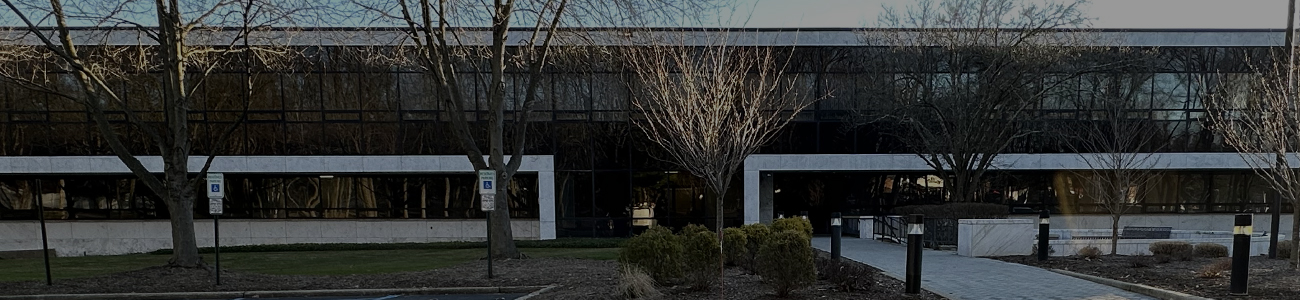
The family leave attorneys at Rabner Baumgart Ben-Asher & Nirenberg, P.C. represent employees from the firm’s Montvale office in Bergen County and throughout New Jersey.
Rabner Baumgart Ben-Asher & Nirenberg, P.C. represents employees who were denied leave, discouraged from asking for it, or pushed aside when they came back. We frequently hear the same basic story. Because the New Jersey Family Leave Act applies to employers with as few as 15 employees worldwide, a worker at a small company is often protected even when the employer assumes otherwise.
For a wider view of other workplace protections available in this state, please review our page on other employment law rights.
The New Jersey Family Leave Act guarantees an eligible employee up to 12 weeks of unpaid, job-protected leave in any 24-month period. The leave may be used either to care for a family member with a serious health condition, or to bond with a child after birth, adoption, or foster placement. At the end of the leave, the employee is entitled to return to the same position, or to an equivalent one.
Eligibility turns on two thresholds. An employer is covered if it has 15 or more employees for each working day during 20 or more calendar workweeks, under N.J.S.A. § 34:11B-3. An employee qualifies after three months of employment and 250 base hours in the preceding 12 months. Both thresholds are low, which is why many part-time, seasonal, and recently hired workers are covered.
An employer’s own policy or handbook does not set who is entitled to leave; the statute does. A worker told that the company is too small, or that not enough time has been worked, should confirm that against the thresholds rather than treat it as the final word, because employer policies are often stricter than the law requires or simply out of date.
The federal Family and Medical Leave Act sets a higher bar in most, but not all, ways. Under the FMLA, 29 U.S.C. § 2611, an eligible employee must have worked 12 months and 1,250 hours, at a worksite where the employer employs at least 50 people within 75 miles. However, FMLA leave also can be taken for the employee’s own serious health condition, while state family leave cannot.
In addition, the FMLA’s entitlement to 12 weeks of leave resets every 12 months. In contrast the NJ FLA’s entitlement restarts every 24 months, so an employee who has taken a state family leave within the previous two years would not have a full 12-week allotment remaining.
The NJ FLA also defines “family” expansively. Under the statute, a family member is “a child, parent, parent-in-law, sibling, grandparent, grandchild, spouse, domestic partner, or one partner in a civil union couple, or any other individual related by blood to the employee, and any other individual that the employee shows to have a close association with the employee which is the equivalent of a family relationship.” A grandparent, sibling, or long-term partner falls within that state definition, but outside of federal law.
Since some types of leaves are covered only by the FMLA (e.g., a leave for your own serious health condition), and others are covered only by the NJ FLA (e.g., a leave to care for your grandparent or sibling), under some circumstances it is possible to take time off under one of these laws before you use any of your time off under the other. For example, an employee who takes an FMLA leave to recover from childbirth still may hold an untouched 12-week entitlement to bond with their newborn child under the NJ FLA, which can give them more protected time away from work than either statute allows on its own. Employers often say the opposite, treating the 12 weeks as a single ceiling.
Where an employee’s own health condition is the reason for the absence, our page on medical leave discusses your legal rights.
| New Jersey Family Leave Act | Federal FMLA | |
| Employer size | 15 or more employees worldwide | 50 or more within 75 miles of the worksite |
| Length of service | 3 months | 12 months |
| Hours worked | 250 base hours in the preceding 12 months | 1,250 hours in the preceding 12 months |
| Amount of leave | 12 weeks per 24-month period | 12 weeks per 12-month period |
| Family members covered | Child, parent, parent-in-law, sibling, grandparent, grandchild, spouse, domestic or civil union partner, any blood relative, and anyone whose close association is equivalent to family | Spouse, child, or parent |
| Employee’s own serious health condition | Not covered | Covered |
Neither statute requires an employer to pay for leave. When applicable, you should be able to use your accrued paid time off, including any sick leave time. Alternatively, during a family leave, wage replacement can come from a separate state program, Family Leave Insurance (FLI), which is administered by the New Jersey Department of Labor and Workforce Development. FLI pays benefits for up to 12 weeks in a 12-month period, or for up to 56 days when the leave is taken intermittently.
New Jersey law makes it unlawful to retaliate against an employee for requesting or taking FLI benefits, and entitles a worker returning from that leave to the same or an equivalent position.
Employers rarely announce that they are violating the NJ FLA. A common pattern is that a request goes unanswered, an approval is followed by pressure to delay starting the leave or to work during it, or a quiet reduction of your job responsibilities when you return. New Jersey law treats a refusal to reinstate an employee following a protected leave, or retaliation because you took a leave, as violations of law on their own right, so the harm can arrive weeks or months after your employer granted your leave.
Other examples of common types of violations of the NJ FLA include:
Several of these overlap with other claims. A demotion after a leave request may support both a workplace retaliation claim and a family leave claim, and a termination during or shortly after a maternity leave may amount to pregnancy discrimination in violation of the New Jersey Law Against Discrimination.
We have handled these types of disputes for New Jersey employees for over 30 years. The sequence of events usually is very revealing. If a change to how you were treated at work follows closely after you requested a leave, that timeline is worth putting in front of a lawyer to evaluate whether your employer has violated your legal rights.
An employee who prevails on a New Jersey Family Leave Act claim may be entitled to reinstatement to the same or an equivalent position, compensation for lost wages and benefits, injunctive relief, and reasonable costs and attorney’s fees. The statute also carries civil fines of $1,000 to $2,000 for a first violation and up to $5,000 for a subsequent one.
There are two routes to pursue a formal legal claim, and choosing between them carries consequences. An employee or former employee can file a lawsuit in the Superior Court of New Jersey within two years after the violation of law occurred. Employees in Bergen County can file in the Bergen County Vicinage at the Justice Center in Hackensack. Alternatively, you can file a complaint with the New Jersey Division on Civil Rights within 180 days of the incident.
Family leave cases often turn on documents and dates, as well as on testimony. Sometimes, the strongest material is ordinary paperwork created before anyone contemplated a legal claim.
The request for a leave is the anchor: the date it was submitted, the form it took, and who received it. Medical certifications and the employer’s handling of them can show whether the process was administered or obstructed. Payroll and timekeeping records establish the 250 base hours and three months of service that eligibility turns on, and headcount records establish whether the employer met the 15-employee threshold during 20 or more calendar workweeks. Performance evaluations and other similar feedback from before the request, compared against anything after the request for a leave, frequently reveal a stark contrast. Job descriptions and organizational charts may show whether the returning position was genuinely equivalent. Emails, text messages and other written communications can reflect the employer’s true motives, or at least can offer a window into the decisionmakers’ thought process.
Our attorneys have represented thousands of New Jersey employees. Family leave is one of the areas where early involvement often can change the outcome of a case, or even prevent one from developing in the first place. When a client reaches us before the leave has been taken, we often can resolve the problem by correcting the employer’s misreading of the statute, which is much faster than litigation. Where the employer already has acted, we assess the timeline and available evidence to evaluate the strength of your potential legal claims.
We also look past the leave statutes themselves. One set of facts often supports a family leave claim, a retaliation claim, and a discrimination claim, and the strongest of the three is not always the most obvious one.
We tailor our strategy and advice to your specific facts and circumstances, and recommend the best options to protect your legal rights.
Unlike the FMLA, an employer cannot require you to use your paid time off during a NJ FLA leave. If you chose to use paid time off during your family leave, that does not shorten (or extend) your 12-week entitlement, or waive the right to reinstatement. An employee who receives Family Leave Insurance benefits is separately protected against retaliation for having requested or taken those benefits.
No. State family leave may be taken continuously, or on either an intermittent or reduced-schedule basis. Family Leave Insurance pays intermittent benefits for up to 56 individual days, which is less than the 12 weeks available for continuous leave, so FLI wage replacement and NJ FLA job protection do not line up exactly.
An employer may not use a reorganization as cover for removing an employee who took protected leave. The employee is entitled to the same position or an equivalent one, and the timing of a restructuring announced during or immediately after leave is a fact a court will examine closely.
A lawsuit in the Superior Court of New Jersey must be filed within two years of the adverse employment action. In contrast, a complaint filed with the New Jersey Division on Civil Rights must be brought within 180 days.
If you were denied family leave, pressured to cut it short, or returned to a job that is not comparable to the one you left, Rabner Baumgart Ben-Asher & Nirenberg, P.C. can review what happened and explain which laws apply to your situation. Our employment attorneys have represented New Jersey workers for over 30 years. Please call (201) 777-2250 or reach us through our contact page to schedule a consultation.